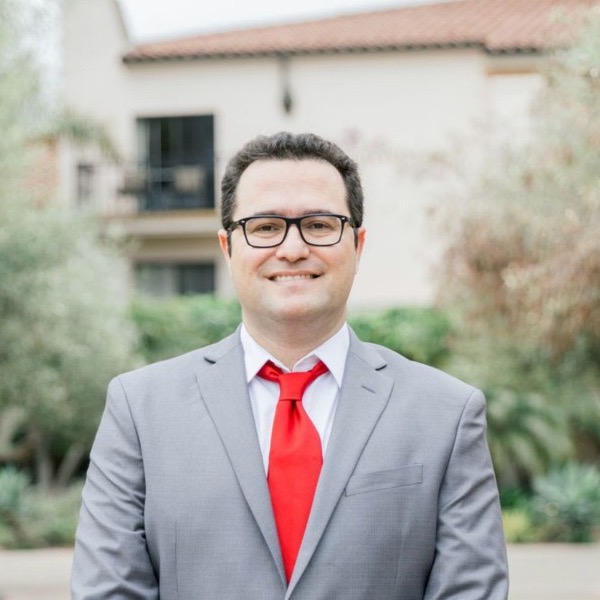
Dr. Benson Karimi

Assistant Professor of Inorganic Chemistry

Department of Physical & Environmental Sciences
College of Science, Texas A&M University–Corpus Christi
Inorganic Chemistry Material Science Nanomaterials Chemical Sensors
Dr. Benson Karimi

About

Researcher, educator, and mentor in inorganic and materials chemistry

20+
Publications
1000+
Total Citations
15+
Years in Research
3
Research Areas

Biography

Dr. Benson Karimi (M. Karimi Abdolmaleki) is an Assistant Professor of Inorganic Chemistry in the Department of Physical and Environmental Sciences at Texas A&M University–Corpus Christi. His research program spans inorganic and materials chemistry, with a focus on platinum-group metal complexes, vapochromic and mechanochromic materials, luminescent sensors, and nanomaterials for environmental remediation. He brings an interdisciplinary approach combining synthesis, spectroscopy, and digital imaging techniques to address challenges in chemical sensing and environmental sustainability.

Research Interests

  • Platinum(II) vapochromic & mechanochromic complexes
  • Luminescent chemical sensors
  • Nanomaterials for water treatment & environmental remediation
  • Covalent organic frameworks & porous materials
  • Bio-polymer nanocomposites
  • Dendrimer-based adsorbents

Contact & Location

  • Office: Center for Sciences (CS) 202
  • Phone: (361) 825-2399
  • Email: ben.karimi@tamucc.edu
  • Department: Physical & Environmental Sciences

Research

Exploring the frontiers of inorganic chemistry, nanomaterials, and sensing

Vapochromic & Mechanochromic Materials

Investigation of platinum(II) salts that undergo dramatic color changes in response to volatile organic compounds or mechanical stimuli, enabling the development of visual chemical sensors.

Luminescent Sensors

Design and characterization of colorimetric and luminescence-based sensors for detecting dissolved organic contaminants in water, including a novel MeCN sensor with dual-mode detection.

Environmental Nanomaterials

Synthesis of nanoscale zero-valent iron (NZVI), carbon quantum dots, and nanodendritic adsorbents for the removal of heavy metals (Pb, Hg, Cd) and organic pollutants from water.

Covalent Organic Frameworks

Development and application of COF-supported metal nanoparticles for catalytic nitrophenol reduction and other chemical transformations with porous architectures.

Porous & Mesoporous Materials

Synthesis of mesoporous fibrous silica nanospheres and layered double hydroxides for adsorption applications, with detailed kinetic, isotherm, and thermodynamic characterization.

Bio-polymer Nanocomposites

Exploration of biopolymer-based composite materials from renewable sources for pollutant remediation and sustainable applications, bridging green chemistry with material science.

Selected Publications

Peer-reviewed articles across inorganic chemistry, nanomaterials, and environmental science

O. Rahmanian, M. Dinari, M.K. Abdolmaleki
Applied Surface Science 428, 272–279 2018
151 Citations
M. Arshadi, M.K. Abdolmaleki, F. Mousavinia, S. Foroughifard, A. Karimzadeh
Journal of Colloid and Interface Science 486, 296–308 2017
91 Citations
M. Arshadi, M.K. Abdolmaleki, F. Mousavinia, A. Khalafi-Nezhad, et al.
Chemical Engineering Research and Design 112, 113–121 2016
88 Citations
M. Arshadi, H. Taghvaei, M.K. Abdolmaleki, M. Lee, H. Eskandarloo, et al.
Applied Energy 242, 1562–1572 2019
84 Citations
A. Roghanizad, M.K. Abdolmaleki, S.M. Ghoreishi, M. Dinari
Journal of Molecular Liquids 300, 112367 2020
69 Citations
M. Arshadi, M.K. Abdolmaleki, H. Eskandarloo, M. Azizi, A. Abbaspourrad
ACS Sustainable Chemistry & Engineering 6 (9), 11662–11676 2018
53 Citations
S.D. Taylor, A.E. Norton, R.T. Hart, M.K. Abdolmaleki, J.A. Krause, W.B. Connick
Chemical Communications 49 (80), 9161–9163 2013
39 Citations
A.E. Norton, M.K. Abdolmaleki, J. Liang, M. Sharma, R. Golsby, A. Zoller, et al.
Chemical Communications 56 (70), 10175–10178 2020
29 Citations
A.E. Norton, M.K. Abdolmaleki, J.M. Ringo, V.M. Shingade, C. Cashen, et al.
Sensors and Actuators B: Chemical 329, 129207 2021
16 Citations
M.K. Abdolmaleki, M.S. Riasi, M. Enayati, A.E. Norton, S. Chatterjee, et al.
Talanta 209, 120520 2020
15 Citations
H. Hadadzadeh, A.R. Rezvani, M.K. Abdolmaleki, K. Ghasemi, H. Esfandiari, et al.
Journal of Chemical Crystallography 40 (1), 48–57 2010
26 Citations
N.S. Tadayoni, M. Dinari, A. Roy, M. Karimi Abdolmaleki
Polymers 16 (11), 1543 2024
18 Citations
M. Dinari, Z. Golshadi, P. Asadi, A.E. Norton, K.R. Reid, B. Karimi
Nanomaterials 14 (17), 1458 2024
17 Citations
E. Azadi, M. Dinari, M. Derakhshani, K.R. Reid, B. Karimi
Molecules 29 (18), 4406 2024
15 Citations
Z. Riyahi, P. Asadi, F. Hassanzadeh, E. Khodamoradi, A. Gonzalez, et al.
Heliyon 9 (8) 2023
12 Citations
View all publications on Google Scholar

Prospective Students

Join our research group and make an impact in chemistry and materials science

The Karimi Research Group at TAMUCC welcomes motivated students at both the undergraduate and graduate levels who are passionate about inorganic chemistry, materials science, and environmental applications. Our lab offers a collaborative and supportive environment where students gain hands-on experience with advanced synthesis, spectroscopy, and analytical techniques.

Graduate Students (M.S.)

We are actively seeking graduate students for thesis-based research in our core areas. You will work on original research problems, contribute to publications, and present at national conferences.

  • Fully funded positions with tuition support
  • Access to state-of-the-art instrumentation
  • Mentorship through the full research process

Undergraduate Researchers

Undergraduates with a strong interest in chemistry are encouraged to join the group for independent research credit or summer research programs.

  • Gain laboratory experience early in your career
  • Co-author research publications
  • Strengthen applications for graduate school or industry

What You Will Learn

Our group provides comprehensive training in modern inorganic chemistry research methods and professional development skills.

  • Inorganic & coordination compound synthesis
  • UV-Vis, IR, NMR, and luminescence spectroscopy
  • Nanomaterial characterization (SEM, TEM, XRD)
  • Scientific writing & conference presentation

How to Apply

Interested students should reach out directly by email with the following materials to discuss potential research opportunities.

  • A brief statement of your research interests
  • Your current CV or resume
  • Unofficial transcript (for graduate applicants)
  • Graduate applicants should also apply through the TAMUCC Graduate Admissions
Contact Dr. Karimi Include "Prospective Student" in your subject line

Contact

Get in touch for research collaborations, inquiries, or student opportunities

Office
Center for Sciences (CS) 202
Institution
Texas A&M University–Corpus Christi
Department
Physical & Environmental Sciences, College of Science